Can you tell us about the Digital Asset Association Austria? How does the DAAA differ from other crypto industry associations across Europe?
The Digital Asset Association Austria (DAAA) was founded in 2018 following discussions within the Austrian government’s FinTech Advisory Board, when digital assets began emerging as a strategic topic.
Its mission is to support the development of the digital asset market in Austria and position the country as a leading European hub.
Today, the association brings together more than 50 institutional members across the ecosystem, including crypto exchanges, fintech startups, banks, law firms, investors, and infrastructure providers.
Members include global platforms such as Bitpanda, Bybit, and KuCoin, as well as leading banks in Central and Eastern Europe (CEE) like Raiffeisen Bank International, Erste Group, world-renowned companies like Visa, Mastercard, Accenture, Deloitte, and PwC.
What makes the DAAA unique is its ecosystem approach, connecting traditional finance, Web3 innovators, regulators, academia, and policymakers, and real world economy.
Through working groups (business, legal, tax etc.) and international events — such as the Global Digital Asset Forum Vienna within ViennaUP Startup Festival — the association fosters collaboration, regulatory dialogue, and innovation to strengthen Austria’s digital asset ecosystem.
You have been described as something of a ‘contact point’ for international crypto firms looking to establish in Vienna. What does that role actually entail day-to-day?
I contribute to the development of the digital asset ecosystem through several complementary roles.
As managing director of the DAAA, I work to help position Vienna and Austria, together with our members, as a leading European hub for digital assets. In practice, this often means acting as a connector and first point of contact for international companies exploring Austria as a base for their European operations — particularly since the introduction of the Markets in Crypto-Assets Regulation (MiCAR).
Beyond that, I contribute to the global ecosystem as an ambassador of the Global Blockchain Business Council, serve as Strategic Advisor to Fintech Circle in London, and am active in academia as a lecturer at the WU Vienna FintechLab.
Across these roles, the goal is to connect industry, investors, policymakers, and academia to support the responsible growth of the digital asset ecosystem.
With the UK developing its own crypto regulatory framework post-Brexit, and Switzerland continuing to attract crypto firms outside the EU framework, how sustainable is Austria’s competitive advantage as a MiCAR hub?
Austria’s competitive advantage remains strong and sustainable, even as other jurisdictions like the UK and Switzerland evolve their own approaches.
Why Austria’s position is durable:
EU access through MiCAR: Unlike the UK or Switzerland, a MiCAR license grants companies passporting rights across all 27 EU Member States. This single-market access is something neither UK nor Swiss frameworks can offer, and it is a key reason why many firms choose Austria as their European base.
Regulatory clarity and credibility: MiCAR provides clear legal certainty for digital asset service providers, which is attractive not just for trading platforms but also for institutional players, banks, and service providers seeking a long-term European foothold.
Professional regulatory implementation: Austria’s regulator has earned a reputation for a strict but fair implementation of MiCAR. It is true that other jurisdictions are enhancing their crypto strategies — London is implementing its own regime, and Switzerland continues to be attractive for non-EU firms.
But those differences are complementary rather than competitive — the UK framework is evolving, but it does not give EU passporting, and Switzerland operates outside the EU, which can be an advantage for certain business models, but it also means no seamless access to the EU single market.
Rather than seeing Vienna’s window of opportunity as narrowing, we see it as distinctive and enduring. Austria’s combination of MiCAR passporting, regulatory credibility, established financial ecosystem, and ecosystem support from organisations like the DAAA means the country remains a compelling hub for digital assets targeting Europe.
In short, other jurisdictions have strengths, but Austria’s MiCAR-based competitive advantage is structural, not temporary — and the window is still wide open.
Vienna’s crypto sector appears heavily weighted toward exchanges and retail-focused platforms. Is there a risk of over-concentration in one segment? What’s being done to develop a more diversified ecosystem?
Exchanges have been the first visible layer of the ecosystem, but the sector is evolving quickly. We already see strong activity in areas such as tokenization platforms for real-world assets; blockchain analytics and compliance solutions; crypto tax infrastructure; digital asset custody; and infrastructure services.
There is intense competition for qualified crypto compliance, legal, and technical professionals in Vienna. With multiple major platforms establishing operations and more in the pipeline, is Austria producing enough qualified professionals? Could talent shortage become a bottleneck for Vienna’s growth as a crypto hub?
That is absolutely true — there is currently intense competition for qualified crypto professionals in Vienna, especially in areas like compliance, anti-money laundering (AML), legal, and technical roles. For anyone with expertise as an AML or Licensing Specialist, there are plenty of opportunities right now.
At the same time, Austria is not relying solely on local talent. Increasingly, professionals are moving to Vienna from across Europe, attracted by the growing ecosystem and the presence of European headquarters of major exchanges.
This inflow helps to mitigate potential bottlenecks and ensures that Vienna can continue scaling as a European crypto hub.
← Previous interview
PwC
Dr Michael Huertas
Next interview →
The Canton Foundation
Melvis Langyintuo

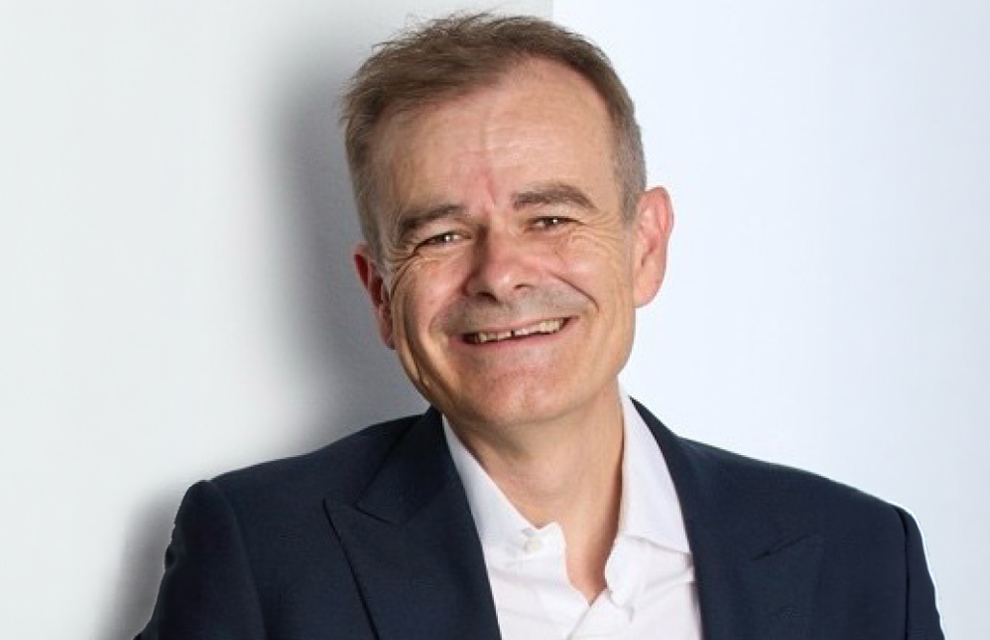 Image: The Digital Asset Association Austria