Bridging the trust gap in digital assets
March 2026
Alexandre Kech, CEO of GLEIF, sits down with Karl Loomes to discuss the trust gap between traditional finance and digital assets — and why verifiable identity may be the missing layer needed to scale tokenised markets
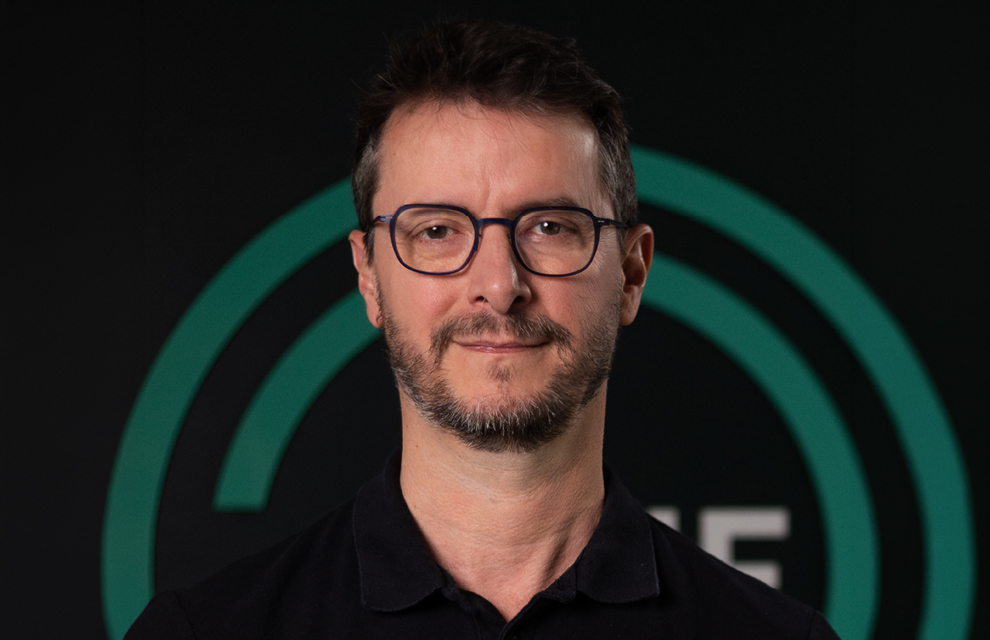 Image: GLEIF
The financial industry has spent the past several years exploring the possibilities of digital assets.
From tokenised funds to onchain collateral, the promise of faster settlement, programmable assets, and round-the-clock markets has captured the imagination of institutions across the globe.
Yet despite the technological progress, a persistent obstacle remains: trust.
For Alexandre Kech, CEO of the Global Legal Entity Identifier Foundation (GLEIF), the issue is not the technology itself. Rather, it is the absence of an identity layer that can provide the same transparency and accountability that traditional financial infrastructure has relied on for decades.
“The trust issue we have with digital assets compared with traditional finance is that when you move away from a centralised world of central securities depositories and exchanges — which are the trust enablers of markets — into a decentralised world where intermediaries are less critical, the further away your counterparties are,” Kech explains.
“The more open the infrastructure is — like blockchain — the less visibility you have on your counterparties. That leads to a trust issue.”
The decentralisation paradox
Digital assets were designed around the concept of removing intermediaries. In theory, blockchain allows transactions to move seamlessly between participants without the need for central authorities.
However, Kech believes this very principle creates a paradox for financial institutions.
“If you look at digital asset implementations today, they are often done by financial market infrastructure banks within a very closed ecosystem of trusted partners,” he says.
“Wallets are whitelisted, and they ensure that every actor participating in that pilot has been identified — KYB, KYC, everything.”
While this approach provides comfort for institutions experimenting with tokenisation, it ultimately undermines the scalability of decentralised markets.
“That is not scalable,” Kech notes. “You end up with the recentralisation of something that should be decentralised — the reclosing of an ecosystem that should be open.”
For Kech, the long-term value of digital assets lies in the creation of global, open market infrastructure operating 24/7. Achieving that vision, however, requires a new layer of trust.
“We need a trust layer,” he says. “That comes through identity and verifiable credentials related to the compliance status of participants in that ecosystem.”
Equally important is verifying the assets themselves.
“We also need to know what is being traded — that is the concept of verifiable smart contracts. How do we make sure that the tokens being sent around are the right tokens and not mock-ups or fake tokens, which unfortunately happens quite often in this industry.”
Identity as the missing link
In Kech’s view, the financial industry does not need to reinvent the mechanisms required to build trust in digital markets. Many of the necessary components already exist in traditional finance.
One example is the Legal Entity Identifier (LEI), a global identification standard widely used in capital markets.
“Traditional capital markets are already partially secured by the LEI,” Kech says. “Transparency and risk management in traditional capital markets are already supported by it.”
Applying that same standard to digital markets could provide a bridge between existing infrastructure and emerging blockchain ecosystems.
“The idea is simple: if we need that same level of transparency, risk management and trust in the digital asset space, let us reuse what already exists instead of reinventing the wheel.”
Building on the LEI framework is the verifiable Legal Entity Identifier (vLEI), which enables organisations to prove their identity digitally and cryptographically across online platforms.
“The vLEI enables an organisation to verifiably and cryptographically prove who it is on any digital platform,” Kech explains. “It also enables individuals acting on behalf of that organisation — through delegated authority — to prove they have the right to sign transactions or act on that platform.”
This capability could replicate many of the trust mechanisms embedded in traditional finance, but in a decentralised and automated form.
“In traditional finance, trust is managed through paper-based KYB and KYC processes and centralised infrastructures such as exchanges and CSDs,” he says. “With the vLEI, that trust can be replicated in a decentralised way through verifiable credentials and digital identity.”
Breaking blockchain silos
As digital asset infrastructure develops, another challenge is becoming increasingly visible: fragmentation. Different institutions are building platforms across multiple blockchain networks — from Ethereum and Solana to Hyperledger Besu — creating what Kech describes as “decentralised silos”.
“The beauty of the vLEI is that it works across chains,” he says.
“Today, digital asset infrastructure is being built on multiple networks. That creates new silos: decentralised silos replacing centralised ones.”
For assets to move freely between networks, identity and compliance credentials must also be portable.
“To break those silos and allow assets to flow across blockchains, the assets need to be recognised as issued by the same issuer across those chains,” Kech explains.
“Wallets also need to be recognised as trustworthy regardless of where they sit.”
In this context, identity becomes an interoperability layer that connects different digital asset ecosystems.
“That portability of identity and compliance credentials is what the vLEI enables.”
From compliance tool to market infrastructure
Today, most digital asset initiatives remain in pilot phases, often involving small groups of trusted participants.
As a result, identity solutions have not yet been a primary focus for many firms.
“The first step was understanding what digital assets themselves could bring and running pilots — usually within a single blockchain environment and with a limited group of trusted participants,” Kech says. “But firms are starting to realise something is missing.”
He points to comments made by BlackRock CEO Larry Fink, who has frequently predicted that most financial assets will eventually be tokenised.
“The industry often stops there and repeats that statement,” Kech says. “But a few lines later he says that tokenisation will not scale unless we solve identity verification.”
Kech believes that recognition is now driving renewed interest in digital identity solutions.
“We will see pilots involving the vLEI and major institutions this year,” he says. “After testing digital assets, firms now want to test digital identity on top of those infrastructures to see how both sides work together to enable scaling.”
A regulatory perspective
Regulators are also beginning to explore new approaches to identity and compliance in digital markets. Kech points to the Financial Action Task Force (FATF), which has examined alternatives to the current “travel rule” framework for sharing transaction information between virtual asset service providers.
“They are beginning to consider verifiable credential approaches that allow compliance without sending personal information everywhere,” he says. Many regulators, he adds, appear open to solutions that achieve regulatory objectives more efficiently.
“So yes — regulators are increasingly interested in digital identity and verifiable credentials,” Kech notes.
“Once the effectiveness of these approaches is demonstrated, they may eventually require them in digital infrastructures.”
Still, regulatory adoption is unlikely to happen overnight.
The road ahead
Looking ahead, Kech believes the next five years will be critical in determining whether digital identity frameworks become foundational components of tokenised financial markets.
“In five years, I would like to see the vLEI recognised as a strong standard and protocol for decentralised identity verification and automated compliance,” he says.
For that to happen, the technology must move beyond pilots and into live production environments across multiple jurisdictions.
“Digital assets themselves are global by nature, so the identity layer should be as well.”
Several major financial market infrastructures have already begun exploring identity frameworks, including Clearstream, Euroclear, and the Depository Trust & Clearing Corporation (DTCC), as illustrated by their recent joint paper, ‘Building the Path Towards Digital Asset Securities Interoperability’.
“What we need is for those leaders to implement these frameworks successfully so that others can adopt them and scale the ecosystem,” Kech concludes.
“If we solve identity, we solve trust. And if we solve trust, then digital asset markets can truly scale.”
From tokenised funds to onchain collateral, the promise of faster settlement, programmable assets, and round-the-clock markets has captured the imagination of institutions across the globe.
Yet despite the technological progress, a persistent obstacle remains: trust.
For Alexandre Kech, CEO of the Global Legal Entity Identifier Foundation (GLEIF), the issue is not the technology itself. Rather, it is the absence of an identity layer that can provide the same transparency and accountability that traditional financial infrastructure has relied on for decades.
“The trust issue we have with digital assets compared with traditional finance is that when you move away from a centralised world of central securities depositories and exchanges — which are the trust enablers of markets — into a decentralised world where intermediaries are less critical, the further away your counterparties are,” Kech explains.
“The more open the infrastructure is — like blockchain — the less visibility you have on your counterparties. That leads to a trust issue.”
The decentralisation paradox
Digital assets were designed around the concept of removing intermediaries. In theory, blockchain allows transactions to move seamlessly between participants without the need for central authorities.
However, Kech believes this very principle creates a paradox for financial institutions.
“If you look at digital asset implementations today, they are often done by financial market infrastructure banks within a very closed ecosystem of trusted partners,” he says.
“Wallets are whitelisted, and they ensure that every actor participating in that pilot has been identified — KYB, KYC, everything.”
While this approach provides comfort for institutions experimenting with tokenisation, it ultimately undermines the scalability of decentralised markets.
“That is not scalable,” Kech notes. “You end up with the recentralisation of something that should be decentralised — the reclosing of an ecosystem that should be open.”
For Kech, the long-term value of digital assets lies in the creation of global, open market infrastructure operating 24/7. Achieving that vision, however, requires a new layer of trust.
“We need a trust layer,” he says. “That comes through identity and verifiable credentials related to the compliance status of participants in that ecosystem.”
Equally important is verifying the assets themselves.
“We also need to know what is being traded — that is the concept of verifiable smart contracts. How do we make sure that the tokens being sent around are the right tokens and not mock-ups or fake tokens, which unfortunately happens quite often in this industry.”
Identity as the missing link
In Kech’s view, the financial industry does not need to reinvent the mechanisms required to build trust in digital markets. Many of the necessary components already exist in traditional finance.
One example is the Legal Entity Identifier (LEI), a global identification standard widely used in capital markets.
“Traditional capital markets are already partially secured by the LEI,” Kech says. “Transparency and risk management in traditional capital markets are already supported by it.”
Applying that same standard to digital markets could provide a bridge between existing infrastructure and emerging blockchain ecosystems.
“The idea is simple: if we need that same level of transparency, risk management and trust in the digital asset space, let us reuse what already exists instead of reinventing the wheel.”
Building on the LEI framework is the verifiable Legal Entity Identifier (vLEI), which enables organisations to prove their identity digitally and cryptographically across online platforms.
“The vLEI enables an organisation to verifiably and cryptographically prove who it is on any digital platform,” Kech explains. “It also enables individuals acting on behalf of that organisation — through delegated authority — to prove they have the right to sign transactions or act on that platform.”
This capability could replicate many of the trust mechanisms embedded in traditional finance, but in a decentralised and automated form.
“In traditional finance, trust is managed through paper-based KYB and KYC processes and centralised infrastructures such as exchanges and CSDs,” he says. “With the vLEI, that trust can be replicated in a decentralised way through verifiable credentials and digital identity.”
Breaking blockchain silos
As digital asset infrastructure develops, another challenge is becoming increasingly visible: fragmentation. Different institutions are building platforms across multiple blockchain networks — from Ethereum and Solana to Hyperledger Besu — creating what Kech describes as “decentralised silos”.
“The beauty of the vLEI is that it works across chains,” he says.
“Today, digital asset infrastructure is being built on multiple networks. That creates new silos: decentralised silos replacing centralised ones.”
For assets to move freely between networks, identity and compliance credentials must also be portable.
“To break those silos and allow assets to flow across blockchains, the assets need to be recognised as issued by the same issuer across those chains,” Kech explains.
“Wallets also need to be recognised as trustworthy regardless of where they sit.”
In this context, identity becomes an interoperability layer that connects different digital asset ecosystems.
“That portability of identity and compliance credentials is what the vLEI enables.”
From compliance tool to market infrastructure
Today, most digital asset initiatives remain in pilot phases, often involving small groups of trusted participants.
As a result, identity solutions have not yet been a primary focus for many firms.
“The first step was understanding what digital assets themselves could bring and running pilots — usually within a single blockchain environment and with a limited group of trusted participants,” Kech says. “But firms are starting to realise something is missing.”
He points to comments made by BlackRock CEO Larry Fink, who has frequently predicted that most financial assets will eventually be tokenised.
“The industry often stops there and repeats that statement,” Kech says. “But a few lines later he says that tokenisation will not scale unless we solve identity verification.”
Kech believes that recognition is now driving renewed interest in digital identity solutions.
“We will see pilots involving the vLEI and major institutions this year,” he says. “After testing digital assets, firms now want to test digital identity on top of those infrastructures to see how both sides work together to enable scaling.”
A regulatory perspective
Regulators are also beginning to explore new approaches to identity and compliance in digital markets. Kech points to the Financial Action Task Force (FATF), which has examined alternatives to the current “travel rule” framework for sharing transaction information between virtual asset service providers.
“They are beginning to consider verifiable credential approaches that allow compliance without sending personal information everywhere,” he says. Many regulators, he adds, appear open to solutions that achieve regulatory objectives more efficiently.
“So yes — regulators are increasingly interested in digital identity and verifiable credentials,” Kech notes.
“Once the effectiveness of these approaches is demonstrated, they may eventually require them in digital infrastructures.”
Still, regulatory adoption is unlikely to happen overnight.
The road ahead
Looking ahead, Kech believes the next five years will be critical in determining whether digital identity frameworks become foundational components of tokenised financial markets.
“In five years, I would like to see the vLEI recognised as a strong standard and protocol for decentralised identity verification and automated compliance,” he says.
For that to happen, the technology must move beyond pilots and into live production environments across multiple jurisdictions.
“Digital assets themselves are global by nature, so the identity layer should be as well.”
Several major financial market infrastructures have already begun exploring identity frameworks, including Clearstream, Euroclear, and the Depository Trust & Clearing Corporation (DTCC), as illustrated by their recent joint paper, ‘Building the Path Towards Digital Asset Securities Interoperability’.
“What we need is for those leaders to implement these frameworks successfully so that others can adopt them and scale the ecosystem,” Kech concludes.
“If we solve identity, we solve trust. And if we solve trust, then digital asset markets can truly scale.”
NO FEE, NO RISK
100% ON RETURNS If you invest in only one digital assets news source this year, make sure it is your free subscription to The Digital Assets Edge
100% ON RETURNS If you invest in only one digital assets news source this year, make sure it is your free subscription to The Digital Assets Edge